


Both styles offer a way to access a feeding garment, but they work differently. The most helpful comparison is not which one sounds better; it is how the actual opening functions, how the garment fits and which design you would feel comfortable using.
What does zipless feeding wear mean?
Zipless feeding wear has a feeding-access design that does not use a zip for that opening. Depending on the garment, the opening may be built into overlapping fabric or another construction, so the word “zipless” does not tell you exactly how it works. Look for a genuine close-up or demonstration of the MMWEAR product you are considering. Check where the access point sits, whether you can understand the opening and how the garment looks when it is closed. Avoid assuming all zipless pieces are identical.
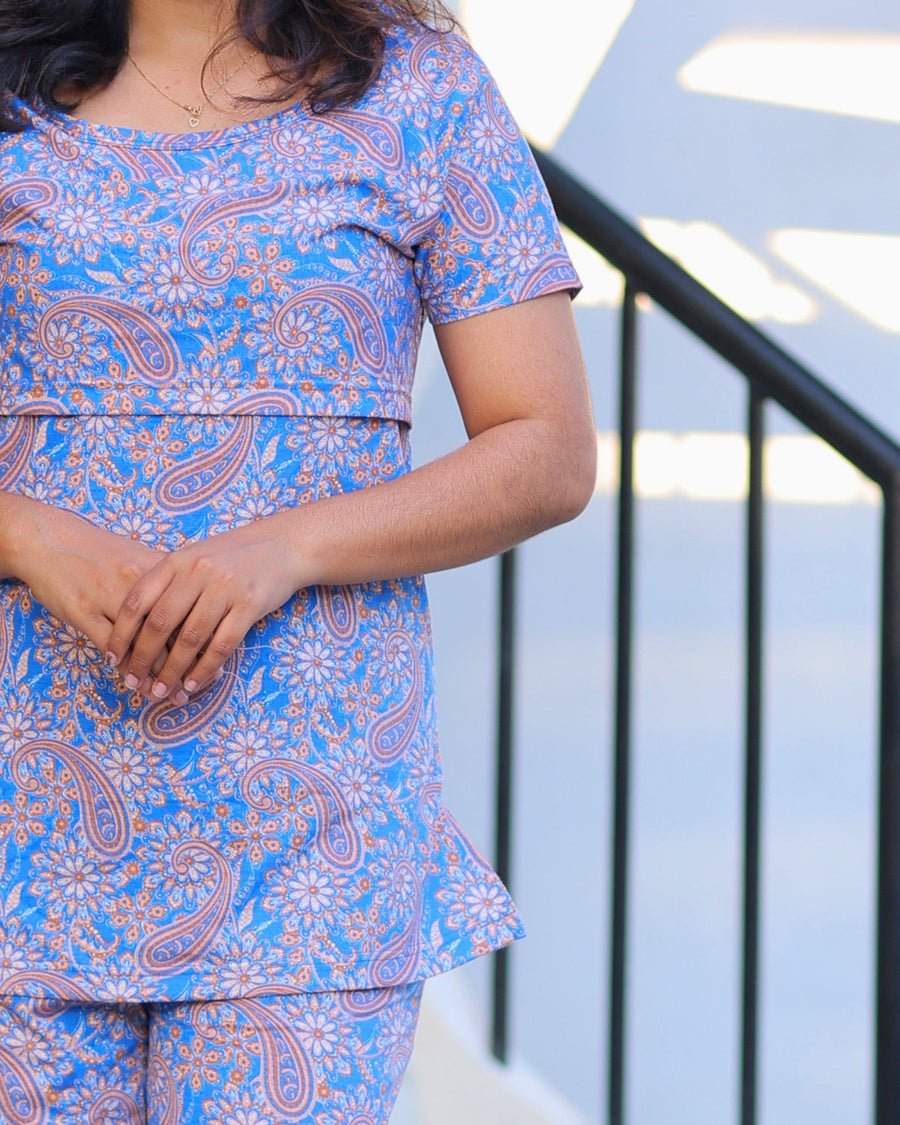
Rangoli Zipless Feeding Pant Set with a pull-up nursing panel
How is zip-based feeding wear different?
A zip-based design uses one or more zips to open an access area. Some MMWEAR maternity maxis are described as having two invisible side zips, while other garments may use a different placement or opening length. An invisible zip is intended to look less prominent, but the final appearance depends on the real piece.
Check the location, length and opening in product photographs rather than assuming a concealed zip will be completely unseen or that every zipped garment offers the same access.

Meena V4 Maternity Kurti Set with side zips on the feeding version
Compare the practical details, not just the labels
How it opens — With zipless clothing, find out how the fabric opening is constructed. With zip clothing, check where the zips sit and how far they open. A short demonstration is often more useful than a long description.
Using it day to day — Think about whether you can find and use the opening comfortably when you need it. You may prefer the familiarity of a zip or the feel of a zipless construction; that preference is personal.
How it looks when worn — Compare full-length garment photographs alongside detail shots. The access mechanism is only one part of the outfit; neckline, fall, sleeves and fabric may matter just as much.
Washing and upkeep — Read the care instructions for the exact garment. Zips, seams, fabrics and embellishments can all affect how a piece should be washed, so neither opening style is automatically easier to care for.
Fit and fabric — Check your bust and hip measurements against the garment chart, note whether the fabric stretches and consider how the outfit feels around the opening. A good mechanism cannot compensate for a fit you do not enjoy wearing.
Which style is better for your routine?
If you like the idea of a garment without a feeding zip, start by exploring MMWEAR’s zipless range and watch how a verified product opens. If you prefer a zip that you can locate and close, compare a garment with genuine feeding zips. Try to judge the complete outfit: the cut, the fabric, the ease of use and whether you would wear it on an ordinary day. There is no honest one-size-fits-all winner. A real demonstration of two comparable garments will help you decide much more than a promise that one mechanism is always faster or more convenient.
See the difference on actual MMWEAR garments
Begin with the Zipless Maternity Loungewear collection and compare it with feeding-friendly maxis or kurti styles that clearly list zip-based access. That way, you can make a choice based on what MMWEAR sells rather than a generic illustration of an opening.
Frequently asked questions
Does zipless mean there is no opening?
No. “Zipless” refers to feeding access without a zip, not necessarily to a garment without an opening. Different products can use different constructions, so check the exact product photographs or demonstration.
Are invisible zips visible from outside?
An invisible zip is designed to sit discreetly within the garment, but how much you can see depends on the placement, fabric and stitching. Review real photos of the particular garment.
Which design is easier to wash?
Neither type has an automatic advantage. Check the washing instructions for the fabric and the garment’s fastening or access design. Follow the care advice for the piece you buy.


